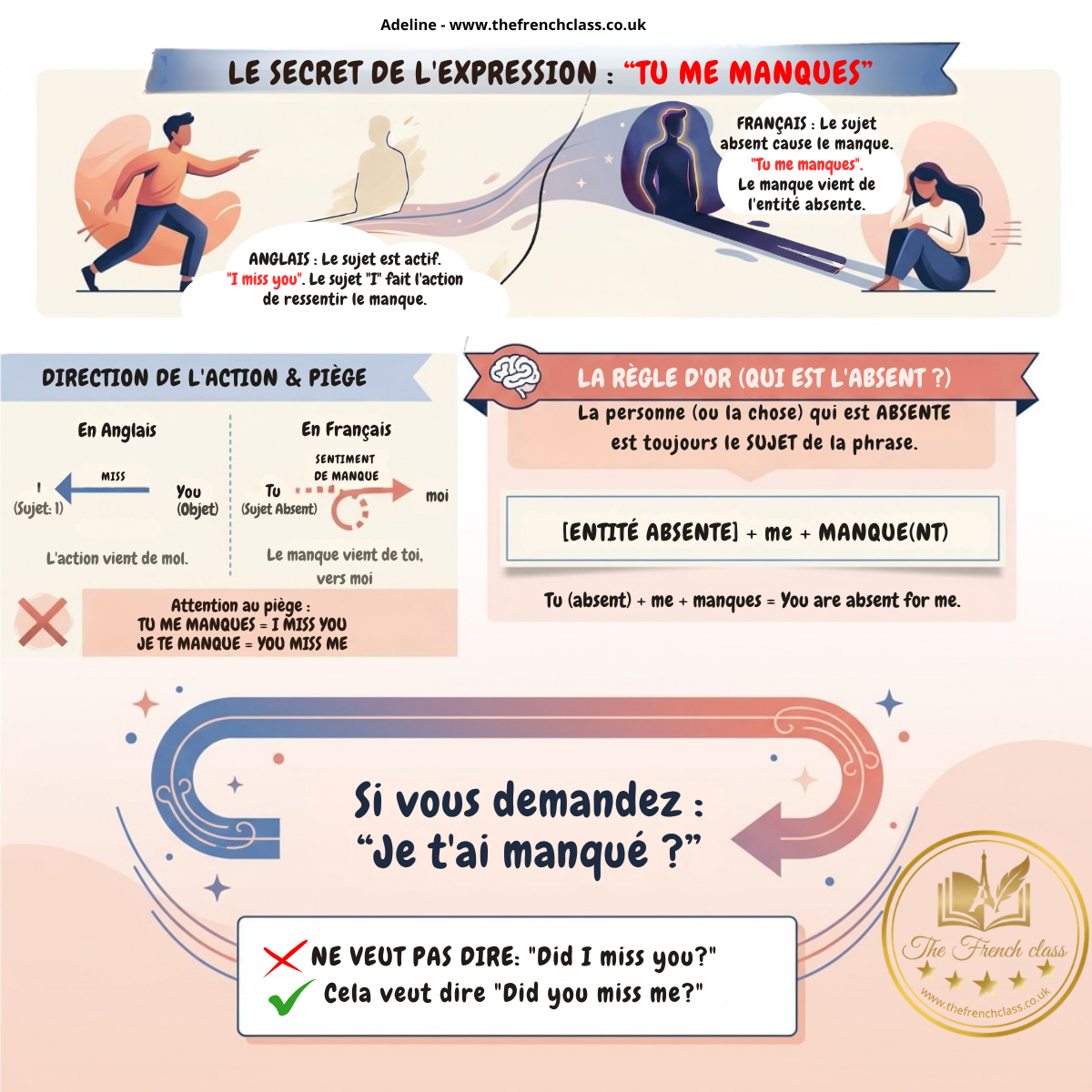
You missed me or I missed you?
In French, you don't miss someone.
Someone is missing FROM you.
🇬🇧 In English: I → miss → you.
The subject DOES the missing. You are in control.
🇫🇷 In French: Tu → me → manques.
The absent person is the subject.
The missing comes FROM someone/something, TOWARDS you.
In English, missing someone is an action. In French, it's something that happens to you. You're not the hero of the sentence. The person (or thing) you love is.
The golden rule: The person (or thing) that is ABSENT = always the subject. (ABSENT ENTITY) + me/te/lui/nous + manque(nt)
❌ The classic trap:
TU ME MANQUES = I miss you
JE TE MANQUE = You miss me
"Je t'ai manqué ?" does NOT mean "Did I miss you?".
It means "Did you miss me?" 😉
Test yourself: translate these 5 sentences:
1. I miss you.
2. She misses her brother.
3. We miss croissants.
4. My parents miss me.
5. Did you miss me?